
Key Takeaways
- The Alignment Myth: Dentistry is not a monolith; success is about matching your specific personality to the right practice model (PPO, FFS, Public Health, etc.).
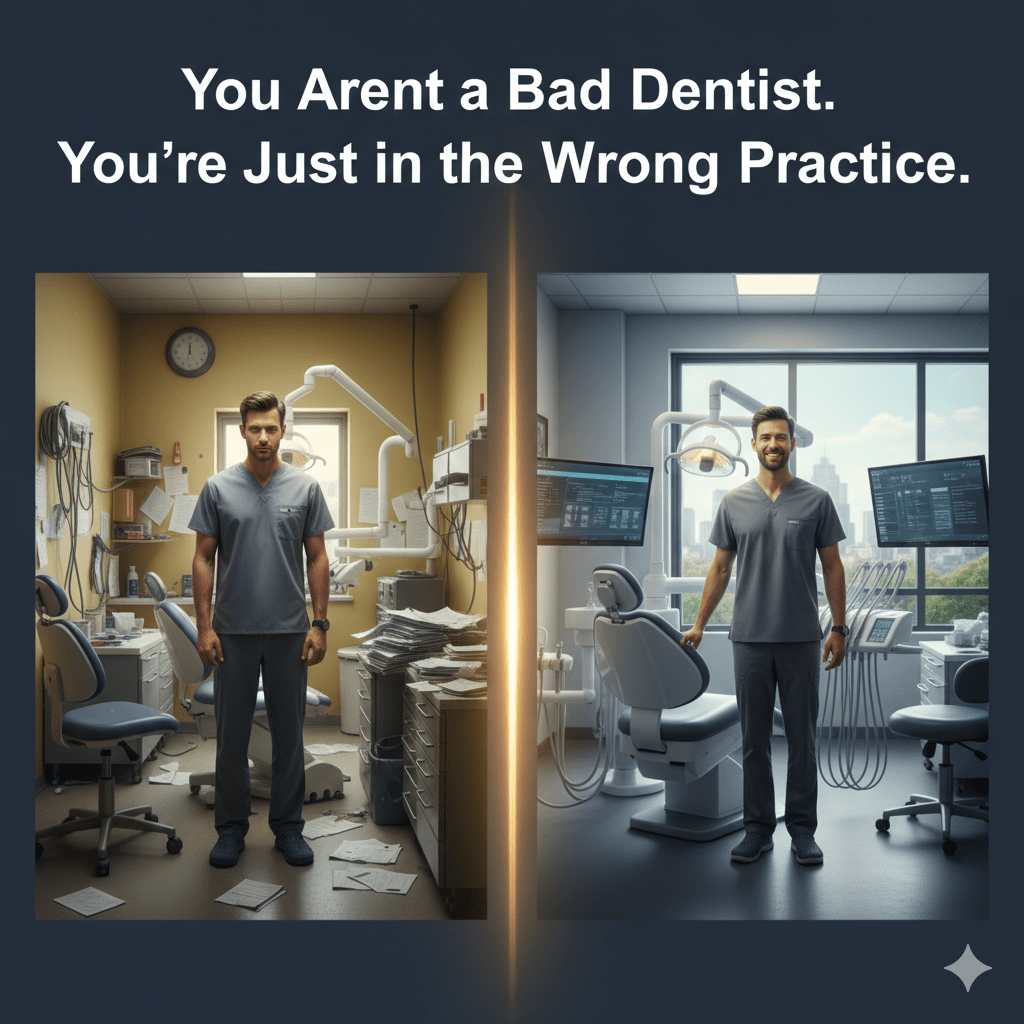
- Environment vs. Habit: Inadequacy often stems from being a “marathon runner in a sprinter’s world.” You aren’t slow; you might just be a detail-oriented artist in a high-volume mill.
- The Lane Test: Public Health favors empathy; DSOs favor clinical focus without business stress; Fee-For-Service (FFS) favors the technical artist.
- Radical Responsibility: If you are in the right environment but still struggling, it’s time to bridge the “Skill Gap” through aggressive Continuing Education (CE).
- Associate Danger Zone: Many talented doctors feel like failures simply because they are in toxic offices with zero mentorship and poor systems.
Have you ever finished a day at the office, sat in your car, and just felt completely inadequate? Maybe you felt too slow, or a single procedure didn’t go perfectly, ruining your entire afternoon.
If you’re feeling that way, I need you to hear this: You are not alone. Almost every dentist has battled that crushing sense of Imposter Syndrome. But here is the truth nobody tells you in dental school: When you feel like you are failing, your first instinct is to blame yourself. But what if you aren’t broken? What if you are a great dentist stuck in the wrong arena?
Dentistry is Not a Monolith
The biggest lie in our profession is that there is only one way to be successful. We have this image of the “Super Dentist” who runs three columns and produces a million dollars a year. If you can’t do that, you feel like a failure.
But dentistry is a collection of very different games played on different fields. Imagine a marathon runner forced to sprint against Usain Bolt. They will look slow and feel inadequate, but they aren’t a bad runner—they are just in the wrong race.
If you are a meticulous artist who needs time to do your best work, a high-volume PPO office will make you feel incompetent every single day. Success is about alignment.
Finding Your Lane: The Practice Models
To find your confidence again, you have to find your home. Here are the primary lanes where you might actually belong:
1. The High-Volume PPO Dentist
This is the mainstream “sprinter” model. To thrive here, you need high efficiency, high social energy, and extreme emotional resilience. If you hate rushing or get drained by chaos, this environment will burn you out. For those in this lane, mastering speed is essential; see my tips in 5 Secrets to Cut Your Composite Filling Time in Half.
2. The Public Health Dentist
FQHCs and community clinics are mission-driven. The pressure for production is lower, and the focus is on service. This is the perfect home for the empathetic dentist who hates “selling” treatment plans.
3. The Private Fee-For-Service (FFS) Artist
This is low volume, high relationship, and high fee. If you want 90 minutes for a crown prep and 20 minutes to chat with your patient, this is your lane. It requires clinical excellence and hospitality. If you’re transitioning here, read PPOs: Stay In or Drop Out? A Dentist’s Real-Numbers Breakdown.
4. The Specialist GP (The “Adrenaline” Lane)
If routine fillings bore you, you may belong in the high-complexity lane of IV sedation, molar endo, or implants. This personality type needs the challenge to feel fulfilled.
Diagnosing the Problem: Is it the Office or Is it You?
We have to be honest. Sometimes the environment is toxic, and sometimes the problem is internal.
Signs it’s the Environment:
- You feel a constant sense of dread driving to work.
- There is zero mentorship or support from the owner.
- Your natural strengths are viewed as a “problem” by management.
Signs the Problem is You:
- You consistently avoid Continuing Education (CE).
- You get defensive whenever a staff member gives you feedback.
- You are still at the same clinical skill level you were at graduation.
If the problem is you, that’s actually good news—because you are the easiest thing to fix. You can bridge a skill gap with the right roadmap. Start by reviewing 8 Career-Killing Mistakes Associate Dentists Must Avoid.
The Path Forward: A 5-Step Treatment Plan
- Identify Natural Strengths: Are you a healer, a technician, or a social butterfly?
- Match the Model: Stop trying to be a “Super Dentist” and find the lane that fits your personality.
- Attack Weaknesses: If you are slow, track your time. If your preps are ugly, prep 50 teeth on a typodont this weekend.
- Track Wins: Inadequacy feeds on amnesia. Write down every successful extraction and every calm patient interaction.
- Build Your Identity: You are not defined by a single open contact; you are defined by the dentist you are becoming.
According to the American Dental Association (ADA), professional wellness and “career fit” are the strongest predictors of long-term retention in the field.
To the dentist who feels like quitting: Please don’t. The profession needs you. You aren’t a bad dentist; you just haven’t found your water yet. Once you find the right fit and commit to the work, dentistry becomes fun again.