
You’ve spent 30 years building your dental practice. It’s your life’s work, your “baby,” and it represents millions of dollars in sweat equity. But in the final years of their careers, most dentists make a series of predictable and devastating mistakes that can wipe out a huge portion of that value, jeopardizing the very retirement they’ve worked so hard for.
Having been on both sides of these transactions, I’ve seen exactly where the landmines are hidden. The traditional “sell it all at once” model is often a financial trap.
This is your roadmap to maximizing your practice’s value. We’ll cover the mistakes made years before the sale, the expensive errors made during the process, and a powerful alternative exit strategy that could be far more profitable than a traditional sale.
Phase 1: The Preparation Mistakes (Years Before the Sale)
The most costly errors happen long before you ever list your practice.
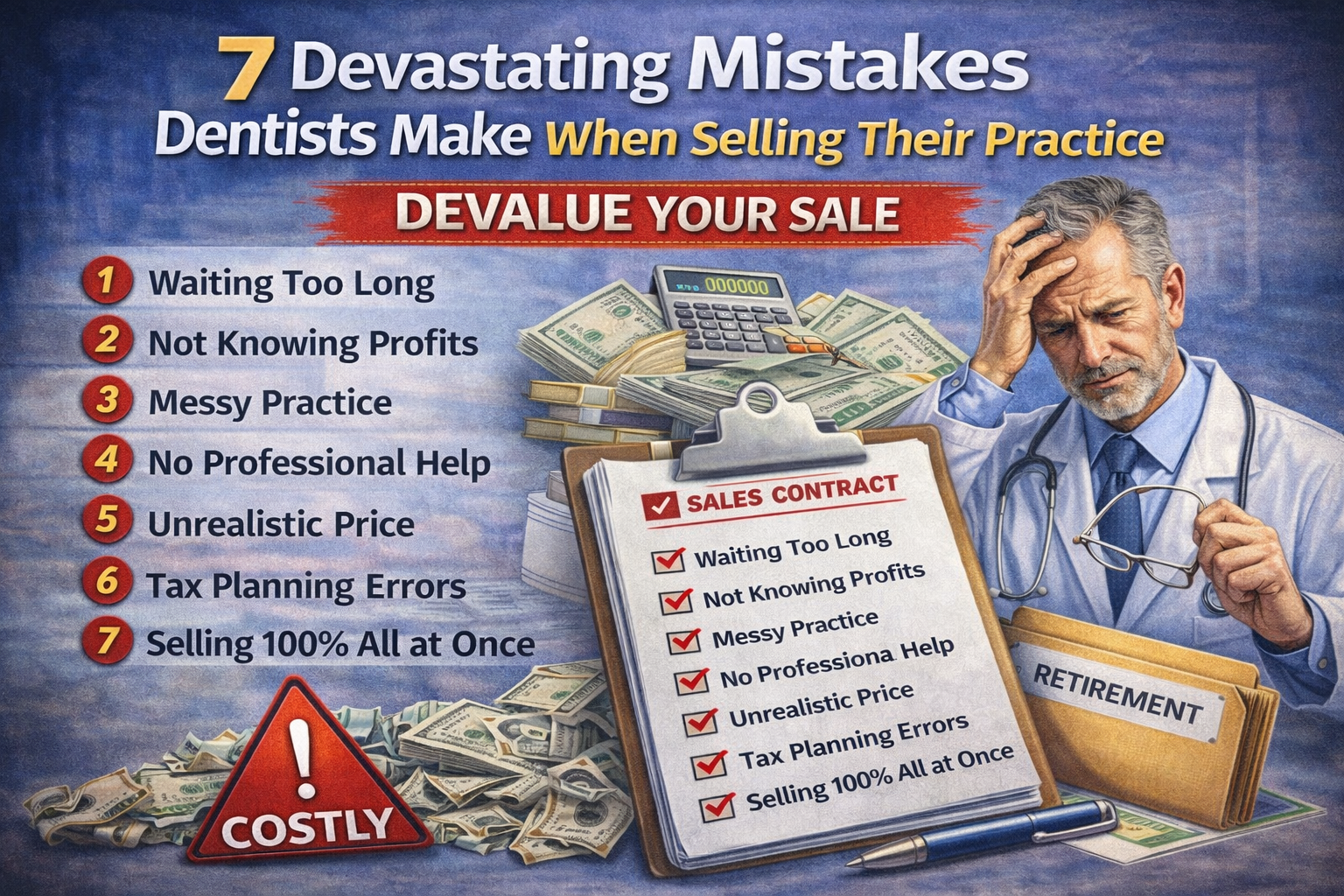
Mistake #1: Waiting Until You’re Burned Out
You’re exhausted, you’ve started to hate your job, and you just want out. So, you let the practice decline for a year or two before selling. Production drops, the team is in chaos, and the technology is outdated. A sophisticated buyer sees that decline and drastically discounts their offer. You must sell your practice when it is at its peak, not in its twilight.
Mistake #2: Not Knowing Your EBITDA
A buyer is not purchasing your revenue; they are purchasing your profit. Your practice is valued on a multiple of its EBITDA (Earnings Before Interest, Taxes, Depreciation, and Amortization). For the three years leading up to your sale, you must be obsessed with cleaning up your P&L statement. Eliminate every personal expense run through the business—the car lease, the family cell phone bills. Every dollar of unnecessary expense you cut can be worth 4x, 5x, or even 6x that amount in your final sale price.
Mistake #3: Having a “Messy House”
Is your practice run by your personality, or by systems? A corporate buyer is purchasing a well-oiled machine, not a fixer-upper that depends on you. You need documented systems, a strong office manager, and a team that is loyal to the practice, not just to you. A few strategic investments in modern technology, like an intraoral scanner, in the years before a sale can pay for themselves many times over.
Watch the full, in-depth guide to maximizing your practice sale.
Phase 2: The Process Mistakes (During the Sale)
You’ve cleaned up your practice. Now it’s time to sell. This is where dentists make their most expensive mistakes by trusting the wrong people.
Mistake #4: Hiring the Wrong (or No) Professional Team
Trying to sell your practice yourself to “save” the broker’s commission is a massive error. You MUST hire a dental-specific team.
- A dental broker creates a competitive bidding environment that will almost always net you far more than their commission.
- A dental attorney and CPA understand the critical nuances of asset allocation and restrictive covenants that a generalist will miss. Their ignorance will cost you a fortune.
Mistake #5: Falling for the Fake “Headline Price”
A DSO comes in and offers you a huge, headline-grabbing number. You get starry-eyed. You must understand the difference between the “headline price” and your “walk-away cash.” That big number is often tied to restrictive employment contracts, earn-outs you can’t control, and stock that may be worthless. The only number that matters is the guaranteed, after-tax cash in your bank account at closing.
Phase 3: The Exit Strategy Mistakes (The Million-Dollar Blunders)
The biggest mistakes are often made in the structure of the exit itself.
Mistake #6: Ignoring the Tax Man
The purchase price will be allocated between different assets: goodwill, equipment, non-compete, etc. Each is taxed at a wildly different rate. A smart dental CPA will structure the deal to allocate as much as possible to the lowest-taxed categories, like goodwill (taxed at the more favorable capital gains rate). This must be negotiated before you sign the letter of intent. A small change here can mean hundreds of thousands of dollars in your pocket.
Mistake #7: The “Sell and Walk Away” Fallacy
This is the most profound mistake. Most dentists assume the only option is to sell 100%, get a big check, and retire. But after taxes and fees, that lump sum is often not enough to comfortably fund a 30-year retirement.
The Smarter Alternative: The “Associate and Phase Out” Model
Instead of an abrupt sale, consider this strategy:
- Hire a sharp young associate.
- Continue to earn a great owner’s salary from the practice’s profit for another 3-7 years while you gradually scale back your clinical days.
- Mentor your successor to ensure a smooth transition.
- Eventually, sell the practice to that associate or on the open market.
Every additional year of high-level income you draw from the practice is another year of retirement you don’t have to fund from your nest egg. This phased approach often results in a much stronger final financial position and is an emotionally and financially smarter way to transition.