
For decades, we’ve waged a singular war against sugar. We’ve told our patients that if they just brush, floss, and avoid sweets, they’ll be fine.
But what if, while we’ve been obsessing over sugar, a much bigger, more destructive mistake has been hiding in plain sight? A mistake that our profession has often actively encouraged, and one that is silently destroying our patients’ oral health from the inside out.
Today, we’re exposing that number one mistake. This is a new framework for oral health that moves beyond the outdated drill-and-fill model and positions you as a true, wellness-focused healthcare provider.
The Mistake: “Carpet Bombing” the Oral Microbiome
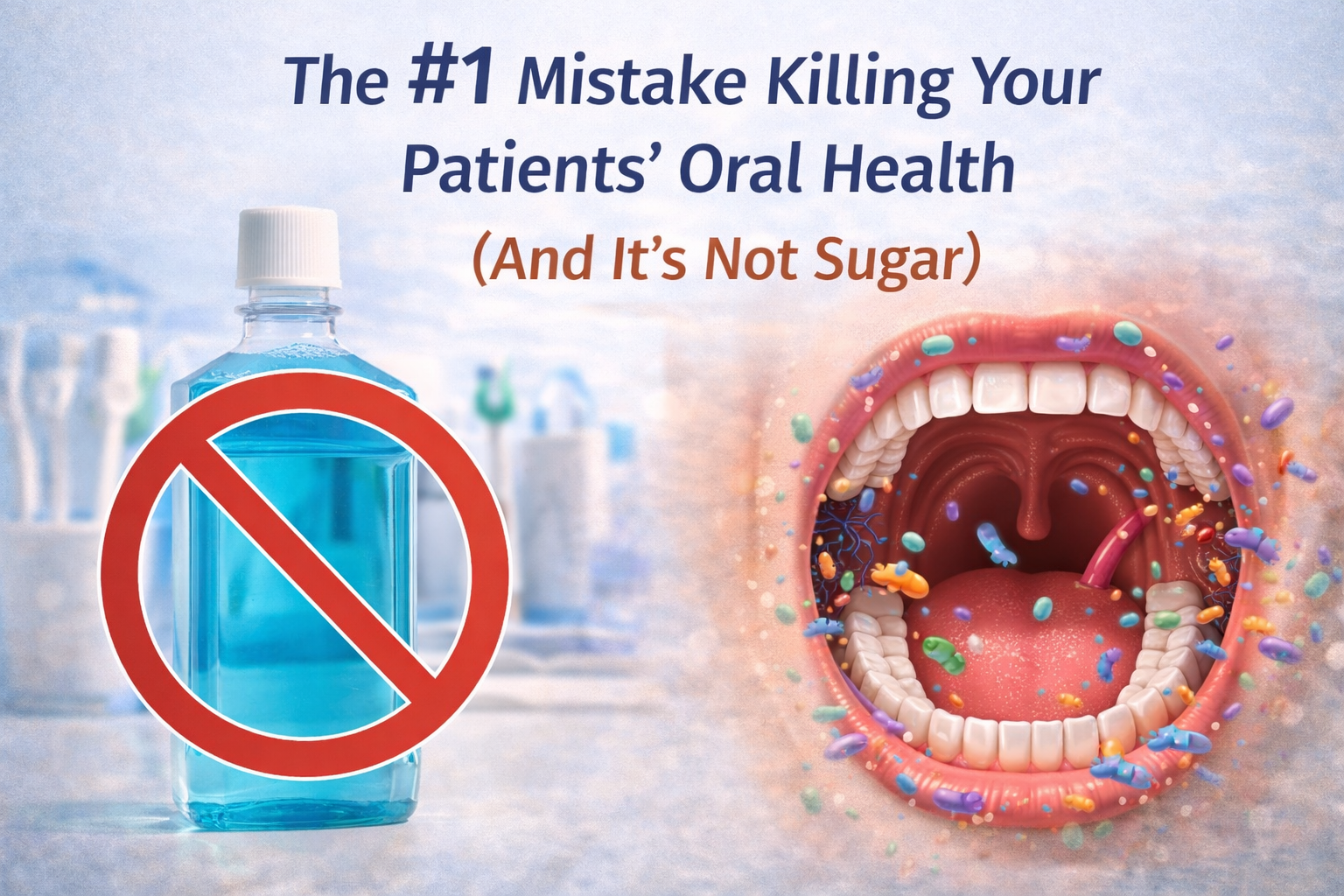
The #1 mistake is the outdated philosophy of “carpet bombing” the mouth. For years, our profession and the entire oral care industry have operated on a “kill all germs” mentality. We’ve recommended antiseptic mouthwashes that burn and toothpastes with harsh foaming agents like SLS.
The emerging science is crystal clear: this is a massive error.
The mouth is a delicate, complex ecosystem, just like the gut. When we tell patients to use these harsh products, we are destroying that ecosystem. We’re wiping out the beneficial bacteria that are essential for protecting their teeth, maintaining healthy gums, and even producing critical molecules like nitric oxide for cardiovascular health.
The reason so many patients are stuck in a cycle of bad breath and recurring disease is that they nuke their oral microbiome, creating a sterile environment that the most aggressive, pathogenic bacteria can rapidly recolonize.
The Fix: Become a steward of the oral microbiome. Teach patients a “less is more” approach. Encourage them to read labels and avoid harsh ingredients. Introduce them to microbiome-friendly alternatives like hydroxyapatite toothpaste. This shift alone moves you from being a tooth mechanic to a modern wellness provider.
Watch the full breakdown of this new framework for oral and systemic health.
The Real Root Causes: Diet Patterns and Airway Issues
Once you’ve stopped carpet bombing the microbiome, you must look deeper for the true drivers of disease.
The Real Root Cause #1: Snacking Frequency, Not Just Sugar
We’re great at telling patients to cut back on what they eat, but we often fail to address how often they eat. Explain in simple terms how every time they snack or sip on something other than water, the pH in their mouth plummets. If they are constantly grazing, their teeth never get the 20-30 minute break needed for saliva to buffer the acid and naturally remineralize. This concept is a game-changer for high-caries patients.
The Real Root Cause #2: A Compromised Airway
This is even more important. You must start screening every single patient, especially children, for the signs of mouth breathing. Look for the forward head posture, the dark circles under the eyes, the constantly parted lips.
Mouth breathing is a primary driver of:
- Decay: It dries out the mouth, drops the pH, and allows pathogenic bacteria to thrive.
- Malocclusion: The tongue isn’t in its proper place to guide facial growth.
- Systemic Health Issues: It impacts sleep quality, development, and overall wellness.
Screening for airway issues moves you far beyond just looking at teeth; you are identifying a core health problem that is impacting your patient’s entire life.
The Final Step: Confidently Connect the Mouth to the Body
This is where you deliver the final blow to the outdated model of dentistry and create massive value for your patients. You must confidently and clearly explain the systemic link.
Explain to your patients that when their gums bleed, it’s not normal. It is an open, infected wound. It’s a doorway for pathogenic bacteria to enter their bloodstream and travel anywhere in the body.
The research is now undeniable:
- Oral pathogens are found in the amyloid plaques in the brains of Alzheimer’s patients.
- They are found in the atherosclerotic plaques of patients with cardiovascular disease.
- They are linked to a higher risk of certain cancers and complications in pregnancy.
When you can calmly explain this, you completely reframe the importance of their dental health. You’re no longer just talking about saving a tooth; you are explaining that treating their gum disease is an essential part of protecting their brain, their heart, and their overall health.
The perceived value of periodontal therapy skyrockets, and patients become motivated to accept the care they truly need.
By making these three shifts—protecting the microbiome, identifying root causes, and connecting oral to systemic health—you fundamentally change your role. You move from being a reactive tooth-fixer to a proactive, respected healthcare provider making a profound impact on your patients’ lives.